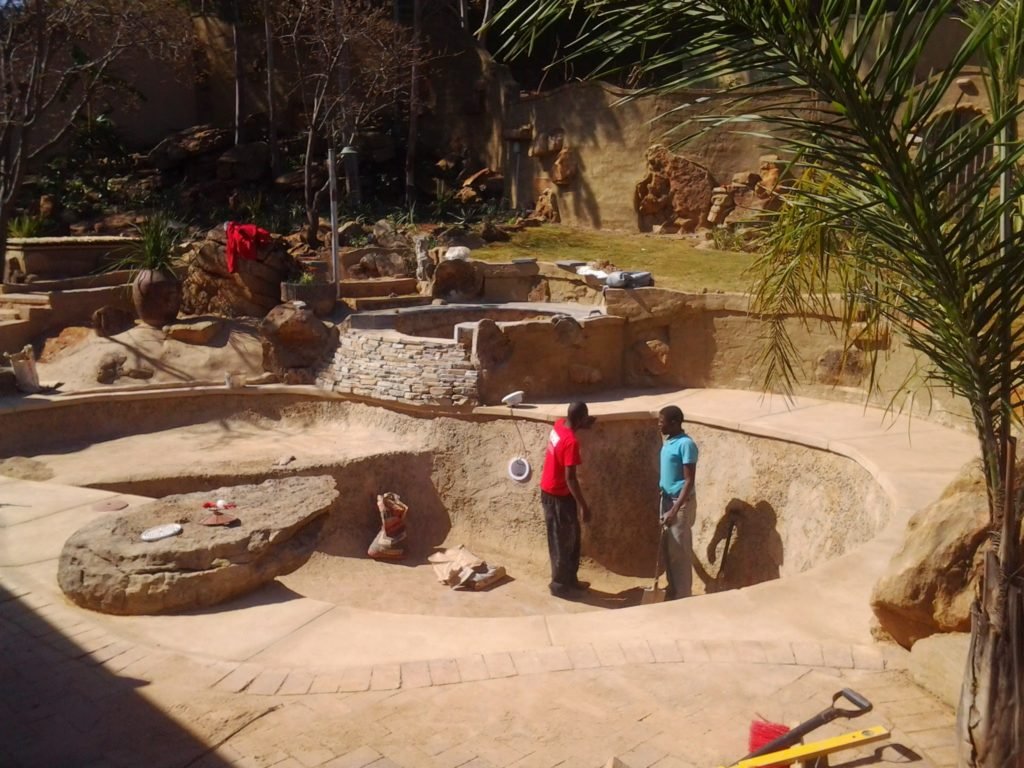
How to Know If Your Site Has a High Water Table
Most homeowners find out they have a high water table the hard way — when a trial hole fills with water overnight. Land near streams, vleis, or old drainage lines in Gauteng often sits on a shallow water table, sometimes less than two metres below the surface. Low-lying stands, properties at the bottom of a slope, and older suburbs built on filled ground carry the same risk. A quick way to check before you commit to a design: dig a one-metre hole and leave it overnight. If water collects in the bottom by morning, the pool excavation will hit the same problem at a greater depth. And the deeper you go, the stronger that water pressure gets.High Water Table Pool Construction Gauteng: A Different Problem to Dolomite
Gauteng’s ground conditions get plenty of attention for dolomite — the underground voids and sinkhole risk that make headlines in parts of the north and west of the province. A high water table is a different problem entirely. It has nothing to do with rock dissolving underground. It’s simply how much water sits in the soil around your excavation, and how much pressure that water puts on an empty shell. The two issues can turn up on the same site, and both change how a contractor builds. Dolomite affects the ground the shell sits on. A high water table affects what happens inside and around the hole while the shell goes in, and every time the pool gets drained afterwards. You can read more on how Gauteng’s ground conditions complicate construction generally, or how dolomite specifically affects foundations across the province — though the fixes for water and for dolomite are not the same.Wellpoint Systems: How We Keep the Excavation Dry
A wellpoint system is a ring of narrow pipes sunk into the ground around the excavation. Each one is perforated near its tip and connected to a header pipe running to a pump. Switch the pump on and it draws water out of the surrounding soil continuously, pulling the local water table down below the base of the dig. That gives the crew dry, stable ground to excavate, reinforce, and pour into for as long as the pump keeps running. The system goes in before excavation starts, not after the hole begins filling. Getting the spacing and depth of the wellpoints right matters. Too shallow, and the water table creeps back through the sides of the excavation before the concrete cures. Too sparse, and wet pockets remain between points. The layout has to match the site — a generic spacing borrowed from the last job isn’t good enough on ground this unpredictable. Once the shell is poured and cured, the wellpoints come out. They’re a construction-phase tool, not a permanent fixture. That distinction matters, because a wellpoint system solves the problem you have while building — not the problem you’ll have years later when the water table rises again and the pool needs to be drained.Hydrostatic Valves: Protecting the Shell After the Water Table Rises Again
A hydrostatic valve sits at the lowest point of the pool floor, usually near the main drain. While the pool is full, the weight of the water inside holds the floor down against any groundwater pressure underneath. The valve stays shut and does nothing — which is exactly what you want most of the time. The risk shows up the moment the pool gets drained, whether that’s for resurfacing, a crack repair, or routine maintenance. An empty shell has nothing pushing down to balance groundwater pushing up. On a high water table, that imbalance is enough to crack a floor or, in bad cases, lift a shell clean out of the ground. The hydrostatic valve opens under that pressure and lets groundwater in through a controlled point, rather than through a crack it finds for itself. This is why a hydrostatic valve belongs in the build from day one, not added later as a repair. We cast it into the floor while the shell goes up, test it, and then it sits there doing nothing — until the day the pool is empty and the water table happens to be high. That’s exactly when it earns its keep.Wellpoints vs Hydrostatic Valves: What Each One Actually Does
The two systems solve different problems at different points in the pool’s life. It helps to see them side by side.| Feature | Wellpoint system | Hydrostatic valve |
|---|---|---|
| When it works | During excavation and the concrete pour | Any time the pool is drained, for the life of the pool |
| Purpose | Lowers the water table so the crew can dig and pour on dry, stable ground | Relieves groundwater pressure under an empty shell |
| Permanent or temporary | Temporary — removed once the shell cures | Permanent — built into the pool floor |
| What happens if it’s skipped | Excavation walls collapse, or the pour goes onto wet, unstable ground | An empty shell risks cracking or lifting when drained later |
Where This Comes Up Most in Gauteng
Parts of the East Rand and Midrand sit on land that was farmland or smallholdings before the suburbs went up, often close to streams, pans, or old drainage lines. Those areas carry a higher chance of a shallow water table than higher-lying suburbs further north. Properties backing onto wetlands or seasonal streams anywhere in Gauteng carry the same risk, regardless of suburb name. None of this rules out building a pool on that kind of stand. It means the site needs a wellpoint plan and a hydrostatic valve priced into the job from the start, not discovered once the excavator hits water. A contractor who has actually built on this kind of ground in your area will ask about it before digging, not after.What to Ask Before You Sign a Quote
A quote that doesn’t mention groundwater at all is a quote based on assumption, not inspection. Any high water table pool construction Gauteng job worth taking seriously starts with a site check, not a guess. Before you accept a quote, ask directly:- Has anyone tested how quickly water collects in a trial hole on this stand?
- Is a wellpoint system included in the price, or billed separately if the crew hits water?
- Does the pool floor include a hydrostatic valve, and where does it sit?
- What happens years from now, if the pool is drained and the water table has risen?
Frequently asked questions
How can I tell if my building site in Gauteng has a high water table?
The easiest way to check is to dig a one-metre hole and leave it overnight. If water collects in the bottom by morning, your pool excavation will likely encounter the same issue at a greater depth, indicating a high water table.What is a wellpoint system and when is it used in pool construction?
A wellpoint system uses a ring of pipes sunk into the ground around the excavation, connected to a pump. It continuously draws water out of the soil, lowering the local water table to provide a dry and stable area for excavation, reinforcement, and pouring the pool shell. This system is used during the construction phase and is removed once the shell cures.What is a hydrostatic valve and why is it important for pools with high water tables?
A hydrostatic valve is installed at the lowest point of the pool floor. It remains closed while the pool is full, but opens automatically when the pool is drained and groundwater pressure from underneath becomes greater than the weight of the empty shell. This controlled release prevents groundwater from cracking or lifting the pool shell.What happens if a wellpoint system or hydrostatic valve is skipped during construction on a high water table site?
Skipping a wellpoint system can lead to excavation walls collapsing or the concrete pour happening on wet, unstable ground. Omitting a hydrostatic valve means an empty pool shell risks cracking or lifting when drained later due to unbalanced groundwater pressure.Which areas in Gauteng are more prone to high water table issues for pool construction?
Parts of the East Rand and Midrand, especially those that were previously farmland or smallholdings near streams, pans, or old drainage lines, often have shallow water tables. Properties backing onto wetlands or seasonal streams anywhere in Gauteng also carry this risk.What should I ask a contractor before signing a quote for pool construction in Gauteng?
You should ask if the water collection in a trial hole has been tested, whether a wellpoint system is included or billed separately, if the pool floor includes a hydrostatic valve and its location, and what the plan is for potential groundwater issues years later when the pool is drained.Build Your Pool with Confidence
If you’re planning high water table pool construction in Gauteng, get a quote from Trademen Pools. We’ll assess your site and explain how we manage groundwater to protect your investment.How Trademen Pools Plans for a High Water Table Site
Every high water table pool construction Gauteng job starts on-site, not on paper. Before a quote is finalised, one of our team walks the stand, checks how the ground behaves at the depth the pool needs to reach, and works out where the wellpoint ring needs to sit and how the hydrostatic valve fits into the floor design. Trademen Pools handles excavation, steel, concrete, plumbing, and finishing in-house with one team, so that assessment carries straight through to the build. Nobody has to hand notes across to a different sub-contractor and hope the message survives the handover.
We have experts for every stage of the process, which means the person who plans for a high water table on your site is working alongside the same crew who dig it, pour it, and finish it. That single-team approach is what keeps a wellpoint layout that looked right on paper actually right in the ground once the excavator starts moving.
If you’re planning a pool on a stand you suspect sits on a high water table, get a quote from Trademen Pools before you commit to a design. Getting the groundwater plan right from the first site visit costs far less than fixing a cracked or lifted shell after the fact.
Why Local Gauteng Experience Matters on a High Water Table Build
Groundwater behaves differently from suburb to suburb, sometimes street to street, across Gauteng. A contractor who has only built on high-lying, well-drained stands has no real reference for what happens when an excavation on an old smallholding near Midrand starts filling with water by the second day. Local experience means knowing which areas are worth testing before a design is even drawn up, and knowing what a wellpoint layout that has actually worked on similar ground looks like.
Trademen Pools has been building and renovating pools across Gauteng since 2013, on ground that ranges from solid highveld clay to the low-lying, water-bearing stands found near old streams and drainage lines. That regional experience is what lets us price a high water table pool construction Gauteng job accurately from the first site visit, rather than discovering the problem once the excavator hits water and the budget has to change mid-build.
Not sure what your site is dealing with?
Wellpoints, hydrostatic valves, or both — the right setup depends on your ground, not a generic spec. Get a quote based on your site, or email us for a non-binding quotation and we'll talk through what your stand needs.